WINTER APPLICATIONS ARE OPEN — DEADLINE OCTOBER 23
WINTER APPLICATIONS ARE OPEN — DEADLINE OCTOBER 23
WINTER APPLICATIONS ARE OPEN — DEADLINE OCTOBER 23

10 Biomedical Programs for High School Students
10 Biomedical Programs for High School Students
Written by
Written by
George Gatsios, Founder of Delta Institute
George Gatsios, Founder of Delta Institute
Published on
Published on
Biomedical programs introduce high school students to the intersection of medicine, biology, and engineering through hands-on learning and academic enrichment. These opportunities explore topics like medical devices, human physiology, and healthcare innovation, preparing you for university and a future career in the field.
Here are 10 biomedical programs for high school students, ranging from virtual courses to hands-on university lab work and competitive research internships.

The Biomedical Engineering Innovation program at Johns Hopkins University is a college-level online course that introduces students to biomedical engineering principles through real-world problem-solving. You’ll learn how engineering principles apply to medicine through topics like biomechanics, medical device design, and physiological modeling. The program is structured like a normal university course, with pre-recorded lectures, assignments, live study sessions, and hands-on lab work with students from around the world.
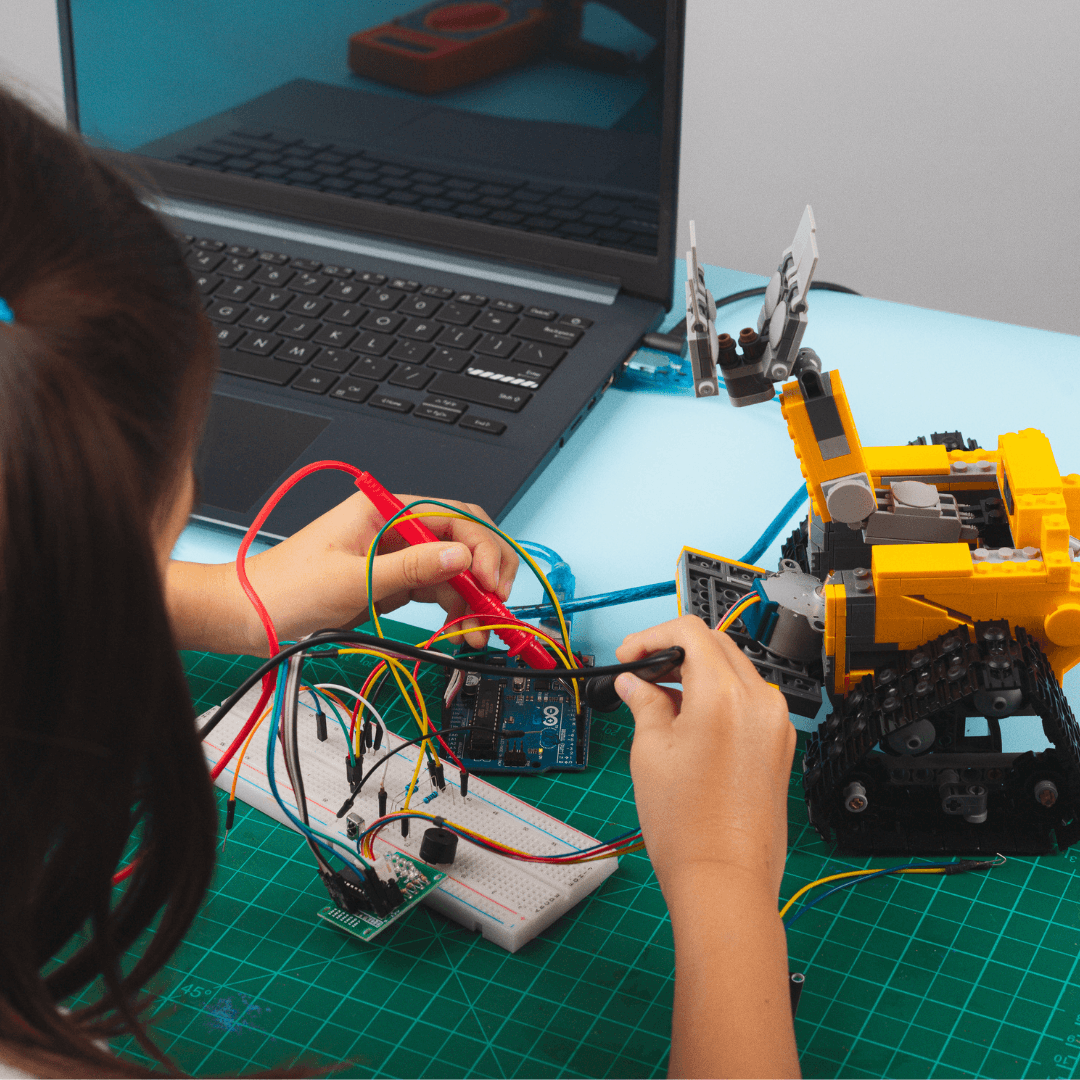
You’ll use tools like Arduino-based systems and simulation models to explore and solve real-life biomedical challenges. The program is available year-round and is primarily asynchronous, so you can complete it in your own time. At the end of the program, you’ll receive 3 college credits from Johns Hopkins University.
Cost: $3,900, $60 application fee
Location: Virtual
Application Deadline: Varies by session
Program Dates: Multiple dates in spring, summer, and fall
Eligibility: High school students or recent graduates who meet academic prerequisites
Delta Institute’s Deepen Mentorship program is an 8-week personalized mentorship experience designed for high school students who want to gain real-world experience in their field of interest; in this case, biomedical engineering. Through one-on-one guidance from experienced mentors, including Ivy League alumni and industry professionals, you’ll work on an advanced biomedical engineering project that can help you build a strong academic and professional portfolio.
You’ll choose the subject of your project based on real-world challenges, such as improving prosthetic limb functionality, developing low-cost diagnostic tools, or designing devices for remote patient monitoring. Your mentor will provide step-by-step guidance the entire time, helping you break down complex biomedical engineering concepts and ensuring you build both technical skills and confidence. At the end of the program, you’ll present your project, receive an expert critique, and gain guidance on your future as well as a letter of recommendation from your mentor.
Cost: $6,500
Location: Virtual
Application Deadline: May 31 (summer III deadline)
Program Dates: Varies
Eligibility: High school students globally

The Biomedical Engineering Summer Program by the Boston Leadership Institute is a competitive three-week program for high school students interested in medical technology and applied science. The curriculum introduces core concepts in biochemistry, materials science, and biomedical design through a structured, hands-on approach. You’ll engage in lab-based activities, such as DNA extraction and genetic engineering using PCR and CRISPR, alongside technical skills like CAD modelling and 3D printing.
Collaborative research is a key component of the program, with past participants designing prosthetic devices, developing discreet insulin delivery systems, and exploring solutions for real-world healthcare challenges. You’ll develop critical thinking by examining current breakthroughs and ethical considerations in biotechnology and medical innovation. With rotating weekly modules and exposure to different subfields, you’ll gain a well-rounded introduction to biomedical engineering and gain insight into potential STEM career pathways.
Cost: $2,500 tuition, $2,097 residential payments
Location: Boston or Wellesley, Massachusetts
Application Deadline: Rolling admissions
Program Dates: 2 sessions in June and July
Eligibility: Students entering 8th grade through college
Duke University offers 30 courses to high school students through its Duke Pre-College Programs, covering topics like psychology, entrepreneurship, neuroscience, and biomedical engineering. The biomedical engineering course explores how engineers develop technologies that diagnose disease, restore function, and improve quality of life, including medical imaging systems, prosthetics, biomaterials, and wearable health devices. You’ll build a strong foundation by studying human anatomy and physiology, medical technologies, biomechanics, and engineering design in healthcare.
Real-world case studies add to the program, providing insight into current advancements and challenges you can solve in biomedical science. The program ends with a capstone project, where you’ll collaborate in teams to design a conceptual biomedical solution to a real health problem, like patient monitoring or mobility. You and your group will present your ideas through prototypes, schematics, or technical presentations, helping you develop communication and problem-solving skills.
Cost: $6,050
Location: Durham, North Carolina
Application Deadline: Rolling admission
Program Dates: 2 sessions available in June and July
Eligibility: Current high school students with at least a 3.0 GPA
NYU’s Applied Research in Science and Engineering program is a tuition-free summer research program that offers high school students hands-on experience in advanced STEM fields, including biomedical engineering. Over 10 weeks, you’ll conduct real-world research under the mentorship of faculty and graduate students, contributing directly to ongoing lab projects.
If you’re interested in biomedical engineering, you can specialize your work in areas like biomolecular engineering, bio-interfacial diagnostics, and applied micro-bioengineering, gaining exposure to how engineering principles are used to solve medical and biological challenges. In addition to lab research, you’ll develop communication and presentation skills when you present your findings to your peers, mentors, academic experts, family members, and friends. at the concluding colloquium.
Cost: Free
Location: Virtual and in New York City, New York
Application Deadline: February (tentatively, based on previous years)
Program Dates: June to August
Eligibility: NYC-based students currently enrolled in the 10th or 11th grade
Brown University’s Summer@Brown lets high school students choose from over 230 non-credit courses, including Biomedical Engineering: The Smart Design of Medical Implants and Devices. This three-week online course introduces the fundamentals of biomedical engineering through a focus on how medical implants are designed and evaluated.
You’ll explore topics like natural and synthetic biomaterials, mechanical properties of tissues, and how cells interact with engineered materials. You’ll also complete a hands-on project where you develop a novel solution for coronary artery bypass materials and build a prototype inspired by biomedical principles. In addition to technical learning, you’ll examine ethical considerations in medical design for a well-rounded education.
Cost: $4,656
Location: Virtual
Application Deadline: May 8
Program Dates: Multiple sessions in June and July
Eligibility: High school students currently enrolled in grades 9 through 12

Drexel University’s BIOMED Summer Academy is a short, intensive program designed to introduce students to core areas of biomedical engineering through hands-on learning. You’ll explore topics like biomaterials, medical imaging, and rehabilitation engineering while developing foundational lab skills.
The program emphasizes applied learning through experiments, site visits, and presentations from industry professionals. Although the academy is only a week, you’ll have time to complete a project that you’ll present at a poster symposium with an awards ceremony to end the program.
Cost: $1,500–$2,000 (depending on when you apply)
Location: Philadelphia, Pennsylvania
Application Deadline: Rolling admissions
Program Dates: Three sessions in July
Eligibility: Rising 10th- to 12th-grade students from the Philadelphia area
The Tufts University Biomedical Engineering Research Scholars (TUBERS) program is a selective summer research opportunity for academically strong high school students interested in biomedical engineering. Over six weeks, you’ll get paid to work full-time in university laboratories, gaining hands-on experience in cutting-edge biomedical research.
You’ll collaborate with faculty and lab mentors to investigate complex questions related to cells, tissues, and organ systems. You’ll also learn essential research skills, including experimental design, data analysis, and hypothesis testing, while contributing to real scientific projects. Over the six weeks, you’ll prepare a project with your research findings that you can present at local and national science competitions to win scholarship money and honors.
Cost: Free, $17/hour compensation
Location: Metford, Massachusetts
Application Deadline: April (tentatively, based on previous years)
Program Dates: July 6 to August 14
Eligibility: Students 16 years and older from an eligible high school
The UConn Pre-College Summer Program at the University of Connecticut offers high school students an immersive introduction to college-level learning in different STEM fields. You can choose from over 30 courses, including Biomedical Engineering: Exploring and Designing Biomedical Wearable Devices to Record Human Motion and Activities. This course focuses on how engineering and life sciences combine to solve real-world healthcare challenges.
In just one week, you’ll explore biomedical engineering principles while using tools like computer-aided design (CAD), 3D printing, and biomedical sensors. You’ll work in teams to design and build functional prototypes of wearable medical devices that can record and analyze human movement and activity. The course blends lectures with practical lab work, allowing you to connect theory to real-world applications in healthcare innovation.
Cost: $2,250 to $2,350 per course (depending on when you apply), $50 application fee
Location: Mansfield, Connecticut
Application Deadline: June 1
Program Dates: July 19 to 25
Eligibility: Current grade 9, 10, and 11 students with at least a 2.0 GPA

Rowan University’s Research Immersion in Biomedical Science and Engineering program is a six-week summer research experience for rising high school students interested in biomedical engineering and biomedical sciences. You’ll be placed in biomedical engineering or biomedical sciences labs across Rowan’s Glassboro, Camden, or Stratford campuses, where you’ll engage in both guided and independent research projects.
You’ll present your findings at a research symposium at the end of the program to your peers, family members, and teachers. This is a volunteer program, so you won’t get paid for your work, but you will gain valuable experience and skills necessary to succeed in the biomedical field.
Cost: Free
Location: Glassboro, New Jersey
Application Deadline: May 15
Program Dates: June 29 to August 7
Eligibility: Rising high school seniors in the South Jersey area
If you’re interested in research, you can check out other opportunities here!
Biomedical programs introduce high school students to the intersection of medicine, biology, and engineering through hands-on learning and academic enrichment. These opportunities explore topics like medical devices, human physiology, and healthcare innovation, preparing you for university and a future career in the field.
Here are 10 biomedical programs for high school students, ranging from virtual courses to hands-on university lab work and competitive research internships.
The Biomedical Engineering Innovation program at Johns Hopkins University is a college-level online course that introduces students to biomedical engineering principles through real-world problem-solving. You’ll learn how engineering principles apply to medicine through topics like biomechanics, medical device design, and physiological modeling. The program is structured like a normal university course, with pre-recorded lectures, assignments, live study sessions, and hands-on lab work with students from around the world.
You’ll use tools like Arduino-based systems and simulation models to explore and solve real-life biomedical challenges. The program is available year-round and is primarily asynchronous, so you can complete it in your own time. At the end of the program, you’ll receive 3 college credits from Johns Hopkins University.
Cost: $3,900, $60 application fee
Location: Virtual
Application Deadline: Varies by session
Program Dates: Multiple dates in spring, summer, and fall
Eligibility: High school students or recent graduates who meet academic prerequisites
Delta Institute’s Deepen Mentorship program is an 8-week personalized mentorship experience designed for high school students who want to gain real-world experience in their field of interest; in this case, biomedical engineering. Through one-on-one guidance from experienced mentors, including Ivy League alumni and industry professionals, you’ll work on an advanced biomedical engineering project that can help you build a strong academic and professional portfolio.
You’ll choose the subject of your project based on real-world challenges, such as improving prosthetic limb functionality, developing low-cost diagnostic tools, or designing devices for remote patient monitoring. Your mentor will provide step-by-step guidance the entire time, helping you break down complex biomedical engineering concepts and ensuring you build both technical skills and confidence. At the end of the program, you’ll present your project, receive an expert critique, and gain guidance on your future as well as a letter of recommendation from your mentor.
Cost: $6,500
Location: Virtual
Application Deadline: May 31 (summer III deadline)
Program Dates: Varies
Eligibility: High school students globally
The Biomedical Engineering Summer Program by the Boston Leadership Institute is a competitive three-week program for high school students interested in medical technology and applied science. The curriculum introduces core concepts in biochemistry, materials science, and biomedical design through a structured, hands-on approach. You’ll engage in lab-based activities, such as DNA extraction and genetic engineering using PCR and CRISPR, alongside technical skills like CAD modelling and 3D printing.
Collaborative research is a key component of the program, with past participants designing prosthetic devices, developing discreet insulin delivery systems, and exploring solutions for real-world healthcare challenges. You’ll develop critical thinking by examining current breakthroughs and ethical considerations in biotechnology and medical innovation. With rotating weekly modules and exposure to different subfields, you’ll gain a well-rounded introduction to biomedical engineering and gain insight into potential STEM career pathways.
Cost: $2,500 tuition, $2,097 residential payments
Location: Boston or Wellesley, Massachusetts
Application Deadline: Rolling admissions
Program Dates: 2 sessions in June and July
Eligibility: Students entering 8th grade through college
Duke University offers 30 courses to high school students through its Duke Pre-College Programs, covering topics like psychology, entrepreneurship, neuroscience, and biomedical engineering. The biomedical engineering course explores how engineers develop technologies that diagnose disease, restore function, and improve quality of life, including medical imaging systems, prosthetics, biomaterials, and wearable health devices. You’ll build a strong foundation by studying human anatomy and physiology, medical technologies, biomechanics, and engineering design in healthcare.
Real-world case studies add to the program, providing insight into current advancements and challenges you can solve in biomedical science. The program ends with a capstone project, where you’ll collaborate in teams to design a conceptual biomedical solution to a real health problem, like patient monitoring or mobility. You and your group will present your ideas through prototypes, schematics, or technical presentations, helping you develop communication and problem-solving skills.
Cost: $6,050
Location: Durham, North Carolina
Application Deadline: Rolling admission
Program Dates: 2 sessions available in June and July
Eligibility: Current high school students with at least a 3.0 GPA
NYU’s Applied Research in Science and Engineering program is a tuition-free summer research program that offers high school students hands-on experience in advanced STEM fields, including biomedical engineering. Over 10 weeks, you’ll conduct real-world research under the mentorship of faculty and graduate students, contributing directly to ongoing lab projects.
If you’re interested in biomedical engineering, you can specialize your work in areas like biomolecular engineering, bio-interfacial diagnostics, and applied micro-bioengineering, gaining exposure to how engineering principles are used to solve medical and biological challenges. In addition to lab research, you’ll develop communication and presentation skills when you present your findings to your peers, mentors, academic experts, family members, and friends. at the concluding colloquium.
Cost: Free
Location: Virtual and in New York City, New York
Application Deadline: February (tentatively, based on previous years)
Program Dates: June to August
Eligibility: NYC-based students currently enrolled in the 10th or 11th grade
Brown University’s Summer@Brown lets high school students choose from over 230 non-credit courses, including Biomedical Engineering: The Smart Design of Medical Implants and Devices. This three-week online course introduces the fundamentals of biomedical engineering through a focus on how medical implants are designed and evaluated.
You’ll explore topics like natural and synthetic biomaterials, mechanical properties of tissues, and how cells interact with engineered materials. You’ll also complete a hands-on project where you develop a novel solution for coronary artery bypass materials and build a prototype inspired by biomedical principles. In addition to technical learning, you’ll examine ethical considerations in medical design for a well-rounded education.
Cost: $4,656
Location: Virtual
Application Deadline: May 8
Program Dates: Multiple sessions in June and July
Eligibility: High school students currently enrolled in grades 9 through 12
Drexel University’s BIOMED Summer Academy is a short, intensive program designed to introduce students to core areas of biomedical engineering through hands-on learning. You’ll explore topics like biomaterials, medical imaging, and rehabilitation engineering while developing foundational lab skills.
The program emphasizes applied learning through experiments, site visits, and presentations from industry professionals. Although the academy is only a week, you’ll have time to complete a project that you’ll present at a poster symposium with an awards ceremony to end the program.
Cost: $1,500–$2,000 (depending on when you apply)
Location: Philadelphia, Pennsylvania
Application Deadline: Rolling admissions
Program Dates: Three sessions in July
Eligibility: Rising 10th- to 12th-grade students from the Philadelphia area
The Tufts University Biomedical Engineering Research Scholars (TUBERS) program is a selective summer research opportunity for academically strong high school students interested in biomedical engineering. Over six weeks, you’ll get paid to work full-time in university laboratories, gaining hands-on experience in cutting-edge biomedical research.
You’ll collaborate with faculty and lab mentors to investigate complex questions related to cells, tissues, and organ systems. You’ll also learn essential research skills, including experimental design, data analysis, and hypothesis testing, while contributing to real scientific projects. Over the six weeks, you’ll prepare a project with your research findings that you can present at local and national science competitions to win scholarship money and honors.
Cost: Free, $17/hour compensation
Location: Metford, Massachusetts
Application Deadline: April (tentatively, based on previous years)
Program Dates: July 6 to August 14
Eligibility: Students 16 years and older from an eligible high school
The UConn Pre-College Summer Program at the University of Connecticut offers high school students an immersive introduction to college-level learning in different STEM fields. You can choose from over 30 courses, including Biomedical Engineering: Exploring and Designing Biomedical Wearable Devices to Record Human Motion and Activities. This course focuses on how engineering and life sciences combine to solve real-world healthcare challenges.
In just one week, you’ll explore biomedical engineering principles while using tools like computer-aided design (CAD), 3D printing, and biomedical sensors. You’ll work in teams to design and build functional prototypes of wearable medical devices that can record and analyze human movement and activity. The course blends lectures with practical lab work, allowing you to connect theory to real-world applications in healthcare innovation.
Cost: $2,250 to $2,350 per course (depending on when you apply), $50 application fee
Location: Mansfield, Connecticut
Application Deadline: June 1
Program Dates: July 19 to 25
Eligibility: Current grade 9, 10, and 11 students with at least a 2.0 GPA
Rowan University’s Research Immersion in Biomedical Science and Engineering program is a six-week summer research experience for rising high school students interested in biomedical engineering and biomedical sciences. You’ll be placed in biomedical engineering or biomedical sciences labs across Rowan’s Glassboro, Camden, or Stratford campuses, where you’ll engage in both guided and independent research projects.
You’ll present your findings at a research symposium at the end of the program to your peers, family members, and teachers. This is a volunteer program, so you won’t get paid for your work, but you will gain valuable experience and skills necessary to succeed in the biomedical field.
Cost: Free
Location: Glassboro, New Jersey
Application Deadline: May 15
Program Dates: June 29 to August 7
Eligibility: Rising high school seniors in the South Jersey area
If you’re interested in research, you can check out other opportunities here!
About the Author

George Gatsios holds a BA and MA in Economics from the University of Cambridge and is the founder of Delta Institute. He leads the organisation’s global strategy, overseeing programme design, partnerships, operations, and product innovation across education, career development, and technology. His work centers on building scalable, hands-on learning experiences that connect students with real-world industry exposure and future-ready skills. Alongside his leadership at Delta Institute, George serves as a Research Assistant in Economics at the University of Cambridge and London Business School, contributing to research at the intersection of economic theory, empirical analysis, and policy. He is an active member of the International Baccalaureate Educator Network (IBEN) and a strong advocate for lifelong learning and internationally minded education.
Turn Insights into Action
Fill in the form to talk to our team and learn more about how Delta Institute can help you!
Turn Insights into Action
Fill in the form to talk to our team and learn more about how Delta Institute can help you!


Jul 17, 2026

Jul 17, 2026

Jul 17, 2026

Jun 11, 2026